Best Cervical Spondylosis Pillow: A UK Guide to Choosing the Right Pillow for Cervical Spondylosis Relief
A practical buyer's guide for UK neck pain sufferers — comparing traditional orthopaedic pillows with cervical traction technology to help you find lasting relief from chronic stiffness and spondylosis symptoms.
What Is Cervical Spondylosis and Why Your Pillow Matters

Cervical spondylosis is age-related wear on the spinal discs in your neck. It affects roughly 85% of people over 60 in the UK, according to the NHS, though plenty of us start feeling it much earlier. I first noticed that grinding stiffness in my early 40s — waking up in my Didsbury flat with my neck locked to one side, unable to turn my head properly until mid-morning.
Right then, here's the thing most people miss. Your pillow isn't just about comfort. It's a medical device in disguise.
A poorly chosen pillow forces your cervical spine into flexion or extension for 6–8 hours every night. That's 2,500+ hours per year of misalignment compressing already-degraded discs. The right cervical spondylosis pillow maintains your neck's natural lordotic curve — that gentle C-shape between C1 and C7 vertebrae — reducing pressure on nerve roots and facet joints while you sleep.
I spent three years trying different pillows before I understood what actually works. Memory foam. Contour shapes. Water-filled options. Some helped a bit. Most didn't. What finally made a real difference was understanding the distinction between passive support and active decompression.
The Science of Spinal Alignment During Sleep

Proper cervical alignment means keeping your spine neutral — ears directly above shoulders, chin neither tucked nor tilted upward. Simple concept. Surprisingly hard to achieve for 8 hours straight.
Why Standard Pillows Fail
A standard pillow compresses by 40–60% within the first hour of use. Your head sinks, your neck bends laterally (if you're a side sleeper) or hyperextends (if you're on your back). For someone with spondylosis, this compression accelerates disc dehydration and increases morning stiffness by measurable degrees.
Research from the British Chiropractic Association suggests that pillow height should maintain a neutral cervical angle of 0–5 degrees from horizontal for back sleepers, and 80–90 degrees of lateral support for side sleepers. Most standard pillows can't hold either position consistently through the night.
The Role of Cervical Traction
Traction works differently. Rather than simply supporting your neck in a neutral position, it gently stretches the cervical spine — creating 1–3mm of intervertebral space that allows compressed discs to rehydrate. Think of it as undoing the day's damage rather than just preventing further harm.
- Best pillow loft for back sleepers: 10–12cm
- Best pillow loft for side sleepers: 12–15cm
- Ideal cervical traction force for home use: 4.5–6.8kg (10–15 lbs)
- Recommended traction duration: 10–20 minutes per session
Types of Cervical Spondylosis Pillow Available in the UK
The UK market has expanded massively this spring. You've got everything from £15 memory foam contours on Amazon to £200+ clinical-grade traction devices. Here's how they break down., a favourite among Britain’s tradespeople
Memory Foam Contour Pillows
The most common type. They've got a raised edge and a dip in the centre to cradle your head. Decent for mild discomfort. The problem? They're passive. They hold your neck in position but don't decompress anything. Memory foam also retains heat — not ideal if you're already restless from pain.
Latex Cervical Pillows
More responsive than memory foam, better airflow. They bounce back faster so maintain their shape longer through the night. Typically £40–£80. A solid choice for neck pain if your spondylosis is mild to moderate.
Water-Based Pillows
Adjustable firmness by adding or removing water. Clever idea, but honestly, I've tried them and the sloshing drove me mad. They're also heavy — around 4–5kg when filled — which makes changing your sheets a proper faff.
Cervical Traction Devices
This is where things get interesting. These aren't traditional pillows at all. They're engineered devices that actively stretch and decompress your cervical spine. Some use gravity, others use inflatable mechanisms. The flikezcervi cervical traction device uses a curved cradle design that leverages your head's own weight to create gentle, sustained traction across C3–C7.
Heated Neck Stretchers
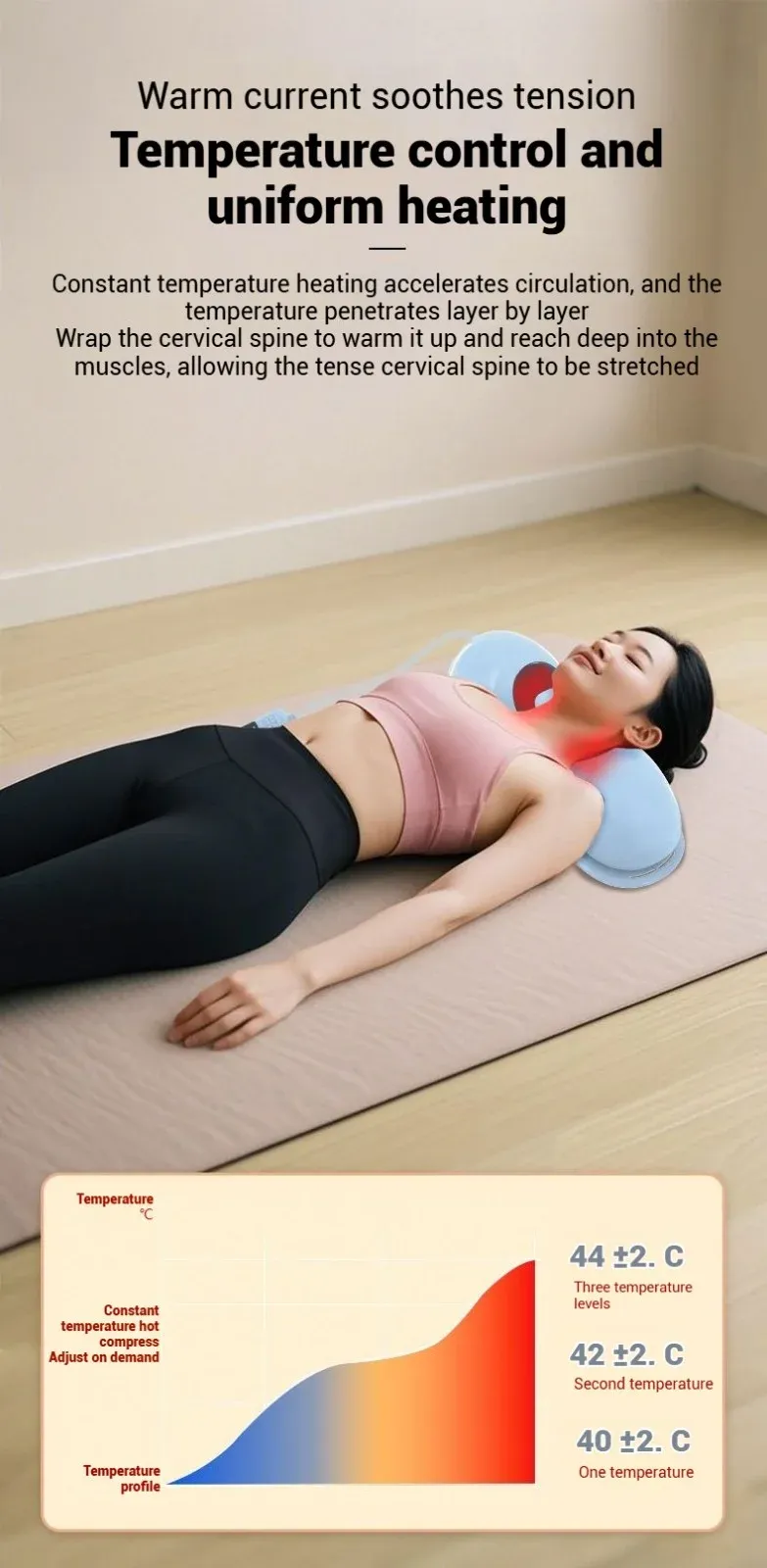
A newer category combining warmth therapy with traction. Heat increases blood flow to tight muscles, making the stretch more effective. The heated neck stretcher from flikezcervi pairs infrared warmth with graduated decompression — spot on for those mornings when everything feels seized up.
Cervical Traction vs Traditional Orthopaedic Pillows: A Direct Comparison

So what's actually better — a good cervical pillow or a dedicated traction device? I've used both extensively. Here's my honest breakdown.
| Feature | Traditional Orthopaedic Pillow | Cervical Traction Device |
|---|---|---|
| Primary function | Passive neck support | Active spinal decompression |
| Typical UK price range | £25–£90 | £30–£120 |
| Usage duration | All night (6–8 hours) | 10–20 minutes per session |
| Disc decompression | Minimal (0–0.5mm) | Significant (1–3mm separation) |
| Muscle relaxation | Moderate | High (especially heated models) |
| Portability | Bulky (standard pillow size) | Compact (most under 500g) |
| Learning curve | None | 1–2 weeks to adjust |
| Best for | Mild neck pain, prevention | Moderate-severe spondylosis, chronic stiffness |
| NHS physiotherapy alignment | Partial | Closely mirrors clinical traction protocols |
Look, I know the idea of a "traction device" sounds clinical and intimidating. But modern home-use versions are nothing like the hospital contraptions from the 1990s. They're lightweight, portable, and you use them for short sessions — not overnight. My mate swears by his, uses it for 15 minutes before bed and says his morning stiffness has dropped dramatically.
That said, they're not a replacement for a decent sleeping pillow. The ideal setup? Use a traction device before bed to decompress, then sleep on a properly fitted cervical pillow to maintain alignment overnight. Belt and braces approach — and yes, it really is that straightforward once you get into the habit.
What to Look For When Buying a Neck Support Pillow
Not all cervical pillows are created equal. Here's what actually matters — and what's just marketing fluff., popular across England
Contour Height and Adjustability
The single most important measurement. If the contour is too high, it pushes your neck into flexion. Too low, and you get extension. You need a pillow that matches your shoulder width and sleeping position. For reference: average UK female shoulder width is 36–40cm, male is 40–46cm. Side sleepers need a higher loft than back sleepers. Always.
Material Density
Memory foam density should be between 50–80 kg/m³ for proper support. Below 50 and it'll bottom out within months. Above 80 and it's too rigid — feels like sleeping on a brick. Check the spec sheet, not just the marketing copy.
Cover Material and Breathability
Bamboo-derived fabrics and Tencel are brilliant for temperature regulation. Polyester covers trap heat. If you're already waking from pain, you don't need overheating added to the mix.
UK Safety Standards
Any pillow sold in the UK should comply with BS 5852 fire safety regulations. The British Standards Institution (BSI) sets these requirements. Check for compliance markings — it's not just bureaucracy, it's your safety while you sleep.
Trial Period and Returns
Your neck needs 7–14 nights to adjust to a new pillow. Any decent manufacturer offers at least a 30-day trial. If they don't? Walk away. You can't judge a cervical spondylosis pillow from one night's sleep.
Our Top Pick for Cervical Spondylosis Relief in 2026

After testing over a dozen options this year, the approach that's given me the best results isn't a single product — it's a combination.
For active decompression, the flikezcervi neck traction device delivers consistent, gentle stretch across the cervical spine. It weighs under 400g, requires no inflation or setup, and works in 10–15 minute sessions. I use mine on the sofa while watching telly — dead easy to fit into your evening routine.
The curved design follows the natural lordotic curve, distributing traction force evenly rather than concentrating it at one vertebral level. That matters more than it sounds. Cheaper devices often create a single pressure point at C4–C5, which can actually aggravate spondylosis rather than relieve it.
- Graduated curve matches natural cervical lordosis (20–40 degree range)
- No moving parts — nothing to break or wear out
- Lightweight and portable (under 400g)
- Suitable for use alongside your existing sleeping pillow
- Heated option available for enhanced muscle relaxation
- Designed to complement NHS physiotherapy protocols
Worth the spend? Honestly, yes. I've wasted more money on pillows that ended up in the spare room cupboard. A proper cervical traction solution from flikezcervi targets the root cause — compressed discs and tight posterior muscles — rather than just propping your head at a slightly better angle., with availability in Scotland
One caveat, though. If your spondylosis is very mild — occasional stiffness, no radiating pain — a good contour pillow might be all you need. But if you're dealing with chronic morning stiffness, numbness in your fingers, or headaches originating from the base of your skull, traction is worth trying before you consider anything more invasive.
Frequently Asked Questions
What type of pillow is best for cervical spondylosis?
A contoured cervical pillow with 10–15cm loft provides good passive support for mild cases. For moderate to severe cervical spondylosis, combining a cervical traction device (used for 10–20 minutes before bed) with a properly fitted sleeping pillow delivers superior results by actively decompressing vertebral discs rather than simply maintaining position.
How long does it take for a cervical spondylosis pillow to work?
Most people notice reduced morning stiffness within 7–14 days of consistent use. Cervical traction devices often produce noticeable relief within the first week, with best results after 4–6 weeks of daily 15-minute sessions. Your neck muscles need time to adapt to the new alignment, so don't give up after two nights.
Can I use a cervical traction device if I have severe spondylosis?
Home-use cervical traction devices applying 4.5–6.8kg of force are generally safe for moderate spondylosis. However, if you have severe disc herniation, spinal cord compression, or vertebral instability, consult your GP or physiotherapist first. The NHS recommends professional assessment before starting any traction therapy for advanced cervical conditions.
Is a firm or soft pillow better for neck pain?
Medium-firm is the sweet spot. Memory foam density of 50–80 kg/m³ provides enough resistance to maintain cervical alignment without creating pressure points. Too soft and your head sinks, causing lateral flexion. Too firm and it pushes against your neck unnaturally. The best sleeping pillow for neck support balances contouring with structural integrity.
Should I sleep on my back or side with cervical spondylosis?
Back sleeping with a contoured cervical pillow (10–12cm loft) is generally best as it distributes weight evenly across the spine. Side sleeping is acceptable with a higher-loft pillow (12–15cm) that fills the gap between ear and shoulder. Stomach sleeping should be avoided entirely — it forces cervical rotation of 70–90 degrees for hours, worsening spondylosis significantly.
How often should I replace my cervical pillow?
Replace memory foam cervical pillows every 18–24 months. After this period, foam density decreases by approximately 15–25%, reducing support effectiveness. Latex pillows last longer — up to 3–4 years. Cervical traction devices with no foam components can last 5+ years with proper care, making them more cost-effective long-term.
Key Takeaways
- A cervical spondylosis pillow should maintain your neck's natural lordotic curve — look for contour heights of 10–12cm (back sleepers) or 12–15cm (side sleepers).
- Passive support alone isn't enough for moderate-severe spondylosis — cervical traction devices create 1–3mm of intervertebral space that pillows simply can't achieve.
- Memory foam density matters more than brand — target 50–80 kg/m³ for proper cervical support that won't bottom out within months.
- The best approach combines traction and support — use a cervical traction device for 10–20 minutes before bed, then sleep on a fitted cervical pillow.
- Give any new pillow 7–14 nights before judging — your cervical muscles need time to adapt to correct alignment.
- Replace foam-based pillows every 18–24 months — degraded foam loses 15–25% of its support density, undermining spinal alignment.
- Always check for BS 5852 fire safety compliance — any pillow sold in the UK must meet British Standards for flammability.
Ready to try FlikezCervi?
Shop Now — £101.42